Stage 3 / 5Digestion trail
Positions to Relieve Gas: Poses and Stretches That Help
Trapped gas can feel surprisingly sharp. A few unhurried positions on the floor or bed often help it shift, and a short checklist shows when pain deserves a proper look.
- Reading time4 min read
- Waymarked
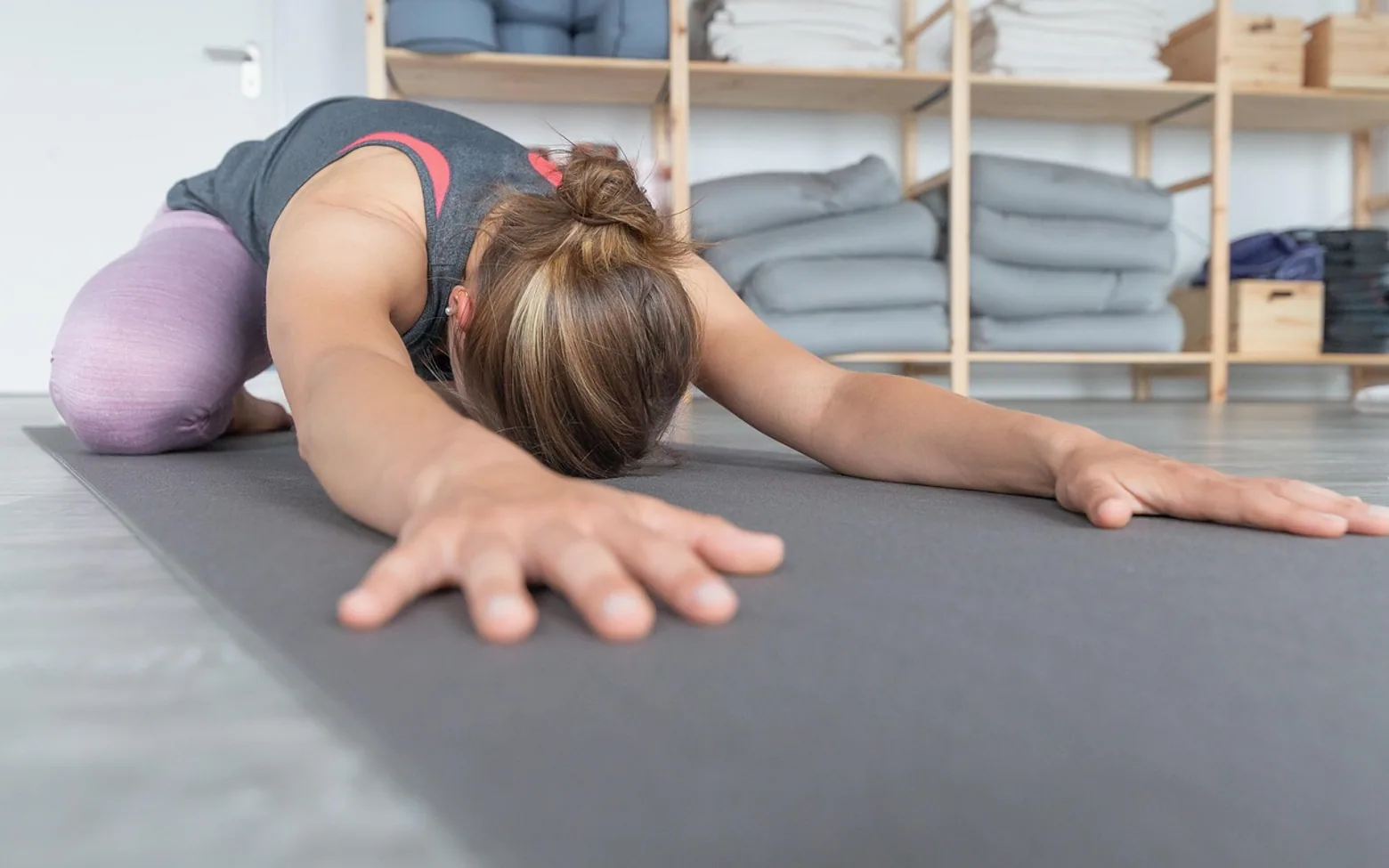
When gas gets stuck, changing how you hold your body is often the quickest free remedy. Lying on your left side, hugging your knees to your chest, resting in child's pose or taking a slow walk can all encourage trapped air to travel through the gut and out. None of these positions is magic, but they are gentle, cost nothing and can be tried in a few minutes.
Below you will find the poses most people reach for, how to do each one without strain, and the point at which belly discomfort is better handled by a doctor than by a yoga mat.
Why gas gets stuck in the first place
Gas in the digestive tract comes from two main sources: air swallowed while eating and drinking, and gas released as gut bacteria break down certain carbohydrates. Usually it moves along without you noticing. It can collect in one spot, though, especially where the bowel bends, and that pocket of pressure can feel crampy, stabbing or tight.
Sitting hunched for hours, eating in a rush and fizzy drinks all make a build-up more likely. If a swollen, tight belly is the bigger problem for you, our guide on how to reduce bloating covers the eating habits behind it.
Six positions worth trying
Move slowly, breathe through your nose if you can, and hold each position for as long as it feels comfortable. A soft surface such as a bed or carpet works fine.
1. Knees to chest
Lie on your back and draw both knees towards your chest, holding them with your arms. Some people prefer one knee at a time, keeping the other leg long. This shape gently presses on the lower belly, which is why yoga classes sometimes call it the wind-relieving pose.
2. Left side, knees bent
Roll onto your left side with your knees drawn up a little. Because of the way the large bowel is arranged, resting on the left side may help gas travel towards the exit. Stay here for several minutes and let your breathing slow.
3. Child's pose
Kneel, sit back towards your heels and fold forward, resting your forehead on the floor or a cushion with your arms long or by your sides. Widening the knees makes room for the belly. Breathing into your back while you rest here can feel soothing.
4. Supine twist
Lie on your back, bend your knees and let them drop slowly to one side while your shoulders stay on the floor. Pause, return to the middle, then switch sides. Twists should feel like a mild wringing, never a strong pull.
5. Happy baby
On your back, bring your knees towards your armpits and hold the outsides of your feet or your shins, soles facing the ceiling. Rocking gently from side to side adds a light massage for the lower back as well.
6. Supported squat
Standing with feet wider than your hips, lower into a squat as far as is comfortable, holding a sturdy chair or worktop for balance. A squat changes the angle of the lower bowel, which some people find helpful when gas sits low down.
Several of these shapes overlap with the routine in how to stretch your lower back safely, so a single short session can look after both.
Positions at a glance
| Position | Where you do it | Good to know |
|---|---|---|
| Knees to chest | Bed or floor | Try one leg at a time if both feel too much |
| Left side lying | Bed or sofa | Easy to combine with slow breathing |
| Child's pose | Floor | A cushion under the hips helps stiff knees |
| Supine twist | Floor | Keep the movement small and slow |
| Happy baby | Floor or bed | Hold your shins if your feet are out of reach |
| Supported squat | Standing, holding a chair | Skip it if your knees or hips complain |
Movement and touch that support the poses
- A slow walk. Ten relaxed minutes around the house or the street often does as much as any pose. Our article on the benefits of walking every day explains why a stroll after meals is such a useful habit.
- Belly massage. With light pressure, circle your fingertips around the belly in a clockwise direction, starting low on the right side, moving up, across and down the left.
- Warmth. A warm (not hot) compress or a hot water bottle wrapped in a towel can relax tense abdominal muscles.
- Looser clothing. Undo the waistband while you rest; tight clothes add pressure to an already uncomfortable belly.
Common questions
How quickly do these positions work?
It varies. Some people feel relief within minutes, while for others the discomfort fades gradually over an hour or two. Trying two or three positions in a row tends to work better than holding one for a long time.
Can I do them if I am pregnant?
Some positions, especially lying flat on your back later in pregnancy, are not recommended. Ask your midwife or doctor which movements suit you before trying a new routine.
What if gas keeps coming back every day?
Frequent gas is often linked to eating habits or particular foods, and a simple food diary can reveal patterns. If you also notice pain after meals, see our guide to stomach pain after eating. Persistent symptoms deserve a conversation with a doctor.
When gas pain is not just gas
Gas pain usually comes and goes and eases once wind passes. Get medical advice promptly if belly pain is severe, sudden or getting steadily worse; if it comes with fever, vomiting, a swollen hard belly or blood in your stool; if you cannot pass wind or open your bowels at all; or if you have recently had abdominal surgery. Pain in the chest, even if you suspect gas, should always be checked urgently. Stop any position that sharpens pain rather than easing it.