Stage 4 / 5Movement trail
Hip Stretches for Pain and Everyday Stiffness
Long hours in a chair leave many hips feeling tight and grumbly. A short mix of gentle stretches and a couple of strengthening moves can help, with clear signs for when to get checked.
- Reading time4 min read
- Waymarked
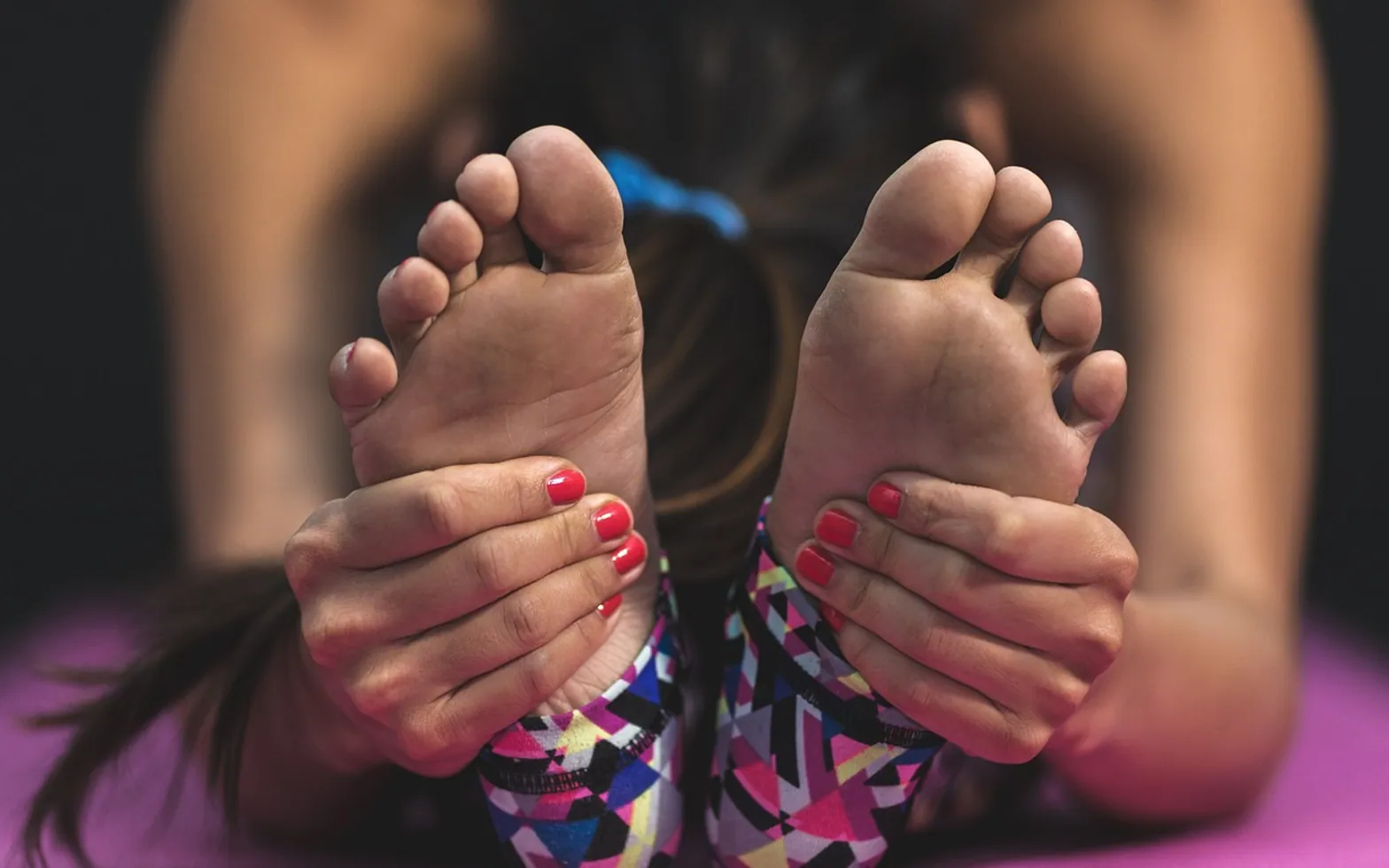
For everyday hip stiffness, the most useful moves are a kneeling hip flexor stretch, a figure-four stretch for the buttock, the butterfly, and two simple strengtheners: the glute bridge and the clamshell. Stretching loosens muscles that shorten during long periods of sitting, while strengthening helps the hip stay supported when you walk and climb stairs. Together they often ease the dull ache that comes from a sedentary week.
A gentle routine is not a fix for every kind of hip pain, though. Pain after a fall, a hip that suddenly cannot bear weight or pain with fever is a reason to see a doctor, not to stretch harder.
Stiffness or something else?
| Often everyday stiffness | Worth getting checked |
|---|---|
| Tightness at the front of the hip after sitting | Pain that started after a fall or twist |
| An ache that eases once you get moving | Pain that worsens through the day despite rest |
| Stiffness in the morning that fades quickly | Pain at night that disturbs sleep |
| Mild discomfort after a long walk or drive | A limp, locking, or the leg giving way |
Five stretches to try
Warm up with a few minutes of walking or marching on the spot first. Hold each stretch for several slow breaths and repeat on both sides.
1. Kneeling hip flexor stretch
Kneel on a cushion with one knee down and the other foot flat in front of you. Tuck your tailbone slightly under and shift your weight forward until you feel a stretch at the front of the hip on the kneeling side. Keep your upper body tall. This targets the hip flexors, which tend to shorten when you sit a lot.
2. Figure-four stretch
Lie on your back with both knees bent. Cross your right ankle over your left knee, then draw the left thigh gently towards you until you feel a stretch in the right buttock. A seated version works too: sit on a chair, cross one ankle over the opposite knee and lean forward slightly from the hips.
3. Butterfly
Sit on the floor with the soles of your feet together and your knees falling outwards. Hold your ankles and sit tall. Let gravity do the work rather than pushing your knees down.
4. Standing hip circles
Hold the back of a chair and lift one knee slightly. Draw slow circles with the knee, first one way and then the other. This is a mobility move rather than a stretch, useful as a warm-up or a desk break.
5. Knee-to-chest
Lying on your back, hug one knee towards your chest while keeping the other leg long or bent. This eases the back of the hip and the lower back together. It also appears in our routine on how to stretch your lower back safely, which pairs well with this one.
Two moves that build support
Strong muscles around the hip share the load with the joint, so a couple of strengthening exercises are worth adding.
- Glute bridge. Lie on your back, knees bent and feet flat. Squeeze your buttocks and lift your hips until your body forms a straight line from shoulders to knees. Lower slowly. Start with a few repetitions and build up.
- Clamshell. Lie on your side with knees bent and stacked. Keeping your feet together, lift the top knee like a clam opening, then lower it with control. Keep your pelvis still rather than rolling backwards.
Strong hips also help the knees track well, which is why our guide to knee exercises for pain includes some of the same muscles.
A sample week
- Most days: hip circles and the kneeling stretch as a short break from sitting.
- Three days a week: add bridges and clamshells after a walk.
- Evenings: figure-four and butterfly while winding down.
Small changes outside the routine
- Stand up and move about regularly; even a short lap of the room gives the hips a break. Our article on improving your posture at a desk has more ideas for working days.
- Avoid sitting cross-legged for long stretches if it bothers you.
- Choose supportive shoes for walking.
- When sleeping on your side, a pillow between the knees may feel more comfortable.
Common questions
Can stretching make hip pain worse?
Pushing too far, bouncing or stretching a recently injured area can aggravate pain. A stretch should feel like a gentle pull. If pain sharpens or lingers afterwards, stop and ask a professional.
I have had a hip replacement. Are these safe?
Some positions, such as crossing the legs or bending the hip deeply, may be restricted after joint surgery. Follow the specific advice of your surgeon or physiotherapist and check before trying any new stretch.
Why does the outside of my hip ache when I lie on it?
Soreness on the outer hip has several possible causes, including irritation of tendons or the small fluid-filled sacs around the joint. A doctor or physiotherapist can examine it and suggest the right approach.
See a doctor if …
Make an appointment if hip pain lasts more than a few weeks, keeps returning or limits everyday tasks such as walking, putting on socks or getting out of a car. Seek urgent care if you cannot put weight on the leg after a fall, if the hip looks deformed, or if pain comes with fever, redness or a hot, swollen joint. Pain felt in the hip can sometimes come from the back or groin, which is another reason a proper assessment helps.