Stage 5 / 5Movement trail
Knee Exercises for Pain: Gentle Moves to Build Support
Strong thigh and hip muscles take pressure off a grumbling knee. These low-impact exercises can be done at home with a chair and a towel, and a few rules keep them safe.
- Reading time4 min read
- Waymarked
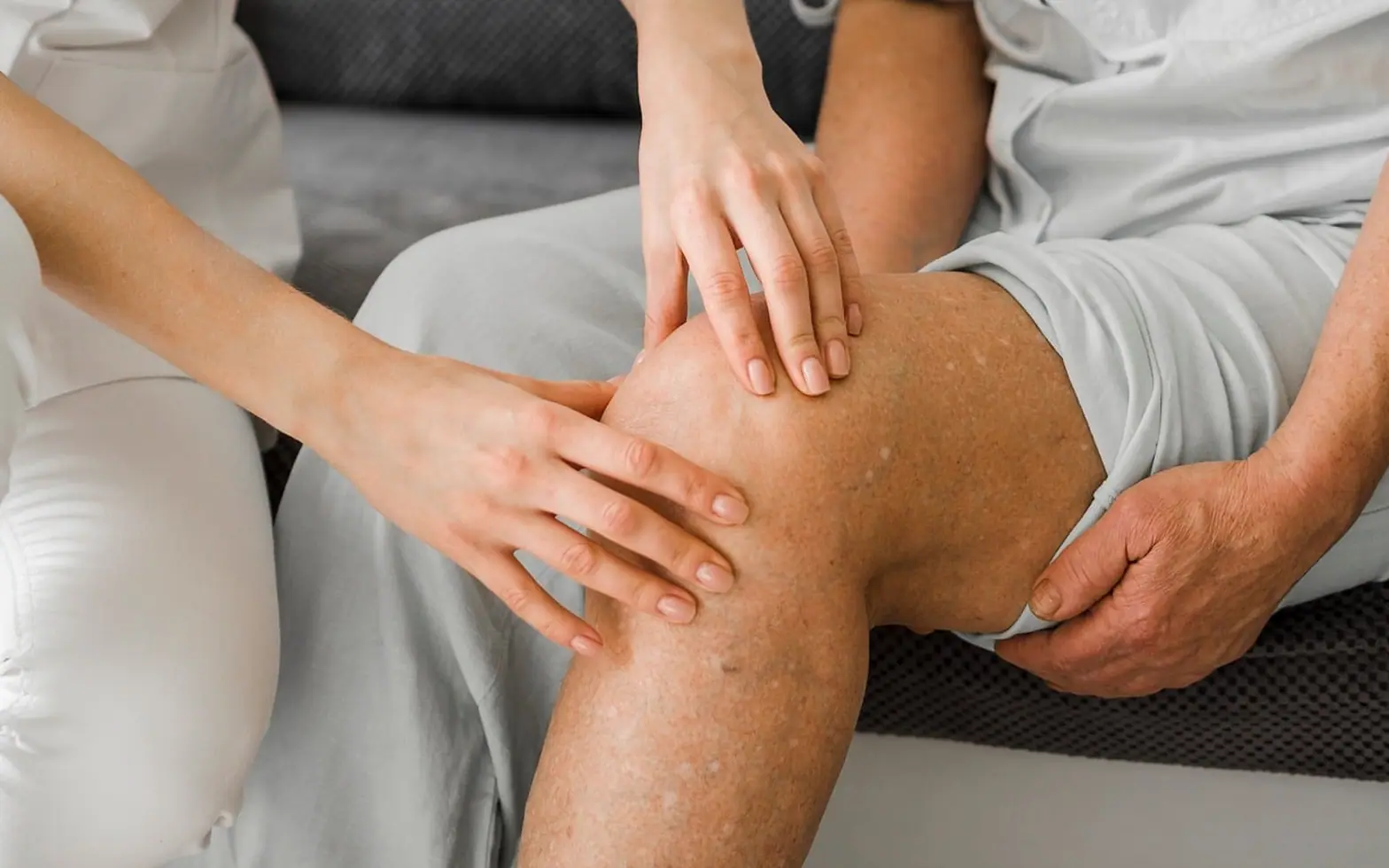
Gentle strengthening is one of the most widely recommended ways to look after an achy knee. Exercises such as straight leg raises, quad sets, heel slides, sit-to-stands, step-ups and calf raises build the muscles that support the joint, while hamstring and calf stretches keep the leg flexible. Start small, move slowly and stop if pain becomes sharp. For new, severe or swelling knee pain, get it assessed before exercising.
Why muscles matter so much
The knee is a hinge that relies heavily on the muscles around it. The quadriceps at the front of the thigh help control the kneecap and absorb load as you walk. The hamstrings, calves and hip muscles share the work and keep the leg in line. When these muscles are weak or tight, more stress lands on the joint itself. That is why exercise advice for knee pain often looks like a leg-strengthening plan rather than something aimed at the knee alone.
Ground rules
- Use the pain check. Mild discomfort during exercise that settles within a day is usually acceptable. Pain that is sharp, or worse the next morning, means you did too much.
- Go slow. Controlled movements protect the joint better than fast ones.
- Warm up. A few minutes of walking or cycling on a stationary bike prepares the muscles.
- Little and often. Short sessions on most days tend to suit knees better than occasional long workouts.
Eight exercises to try
- Quad set. Sit with your leg straight out in front of you and a rolled towel under the knee. Tighten the thigh muscle to press the back of the knee into the towel. Hold for a few seconds, relax and repeat.
- Straight leg raise. Lie on your back with one knee bent and the other leg straight. Tighten the thigh of the straight leg and lift it to the height of the bent knee, then lower slowly.
- Heel slide. Lying on your back, slide one heel towards your bottom, bending the knee as far as is comfortable, then slide it back out. A sock on a smooth floor helps.
- Sit-to-stand. From a firm chair, stand up without using your hands if you can, then sit down slowly. Use a higher seat or your hands to make it easier.
- Step-up. Using the bottom stair and the banister for balance, step up with one foot, bring the other to meet it, then step down. Lead with the stronger leg on the way down if needed.
- Standing hamstring curl. Hold a chair and bend one knee to bring your heel towards your bottom, then lower it with control.
- Calf raise. Holding a counter, rise onto the balls of your feet and lower slowly.
- Side-lying leg lift. Lie on your side with the bottom knee bent. Lift the top leg, kept straight, a short way and lower it. This works the hip muscles that help keep the knee in line.
Hips and knees work as a team, so the bridges and clamshells in our guide to hip stretches for pain make a natural add-on.
Stretches for knee comfort
| Stretch | How to do it | What it targets |
|---|---|---|
| Seated hamstring stretch | Sit on the edge of a chair, one leg straight with heel on the floor, and lean forward from the hips | Back of the thigh |
| Standing calf stretch | Hands on a wall, one foot back with the heel down, front knee bent | Calf muscles |
| Standing quad stretch | Holding a chair, bend one knee and hold the ankle behind you, knees side by side | Front of the thigh |
Skip the quad stretch if bending the knee that far hurts; looping a towel around the ankle gives you more reach.
A simple weekly rhythm
| Day type | What to do |
|---|---|
| Strength days (three or so a week) | Four or five exercises from the list, a few repetitions each, plus stretches |
| Walking days | An easy walk on flat ground, followed by the calf and hamstring stretches |
| Rest days | Gentle heel slides and quad sets if the knee feels stiff |
Walking is one of the kindest activities for many knees when built up gradually. Our article on the benefits of walking every day has tips on pace and footwear.
What tends to make knees worse
- Deep squats or lunges before the muscles are ready.
- Sudden jumps in activity, such as a long hike after weeks of rest.
- Kneeling on hard floors without padding.
- Worn-out or unsupportive shoes.
- Resting completely for long periods, which can let muscles weaken further.
Common questions
Should I exercise a painful knee or rest it?
After a fresh injury, a short period of rest may be needed. For long-standing aches, gentle movement is often encouraged. A doctor or physiotherapist can tell you which applies.
How long before exercises make a difference?
Muscles take time to strengthen, so expect a gradual change over several weeks of regular practice rather than overnight results.
Can back or hip problems cause knee pain?
Sometimes. Pain can be felt away from its source, and stiffness elsewhere can change how you move. Stretches such as those in how to stretch your lower back safely may help general mobility, but persistent pain deserves an examination.
When to get the knee checked
Contact a doctor or physiotherapist if the knee swells, locks, gives way or clicks painfully; if you cannot fully straighten or bend it; or if pain persists for more than a few weeks. Get urgent help if the knee is hot, red and swollen, especially with a fever, if you cannot bear weight after an injury, or if the leg below the knee becomes painful, swollen or discolored.